Explore

Energy Use

On the cusp of zero-emission transition, SamTrans is driving towards improved efficiency and eliminating impacts.

On Board Meet the Fleet

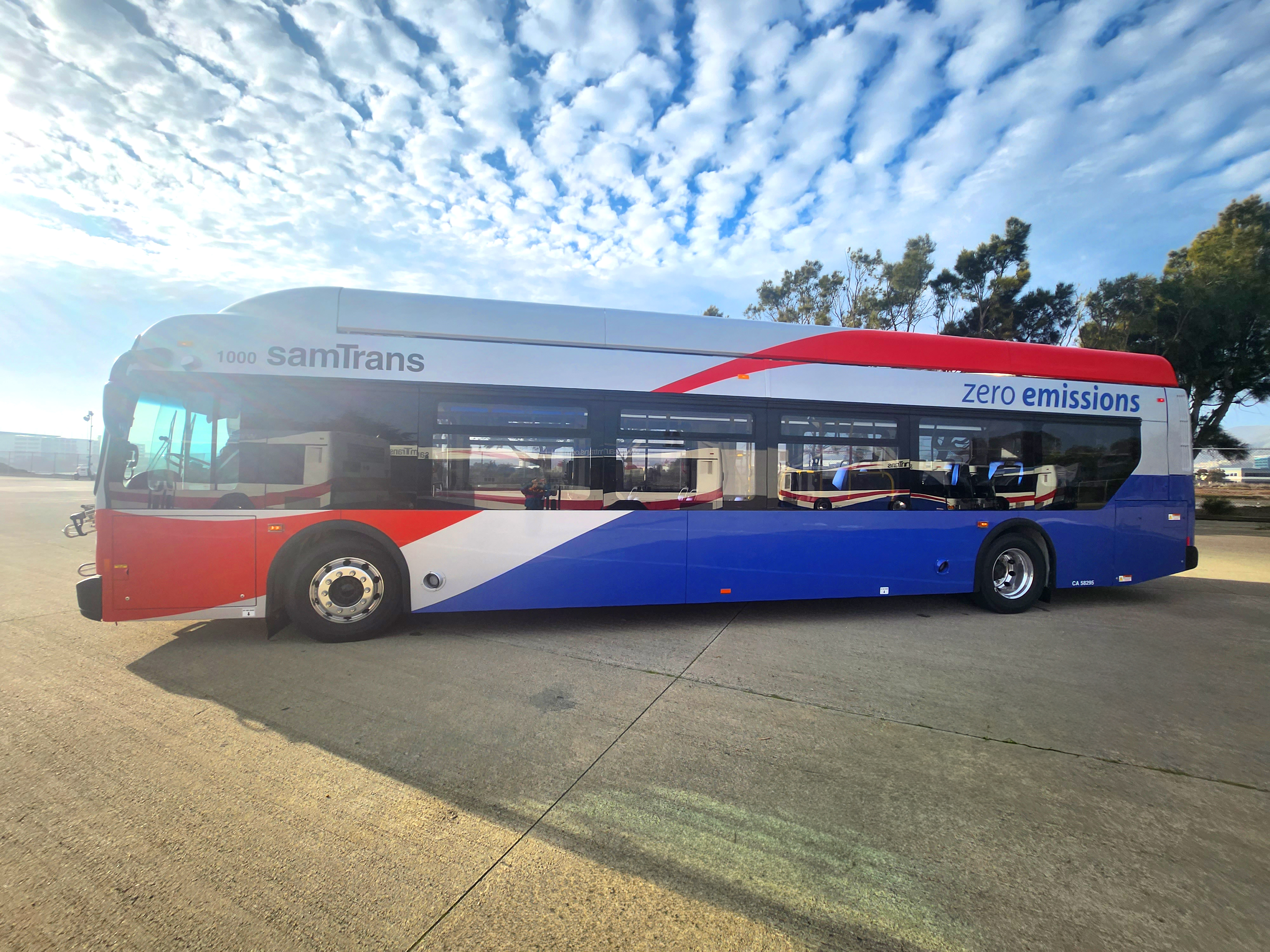
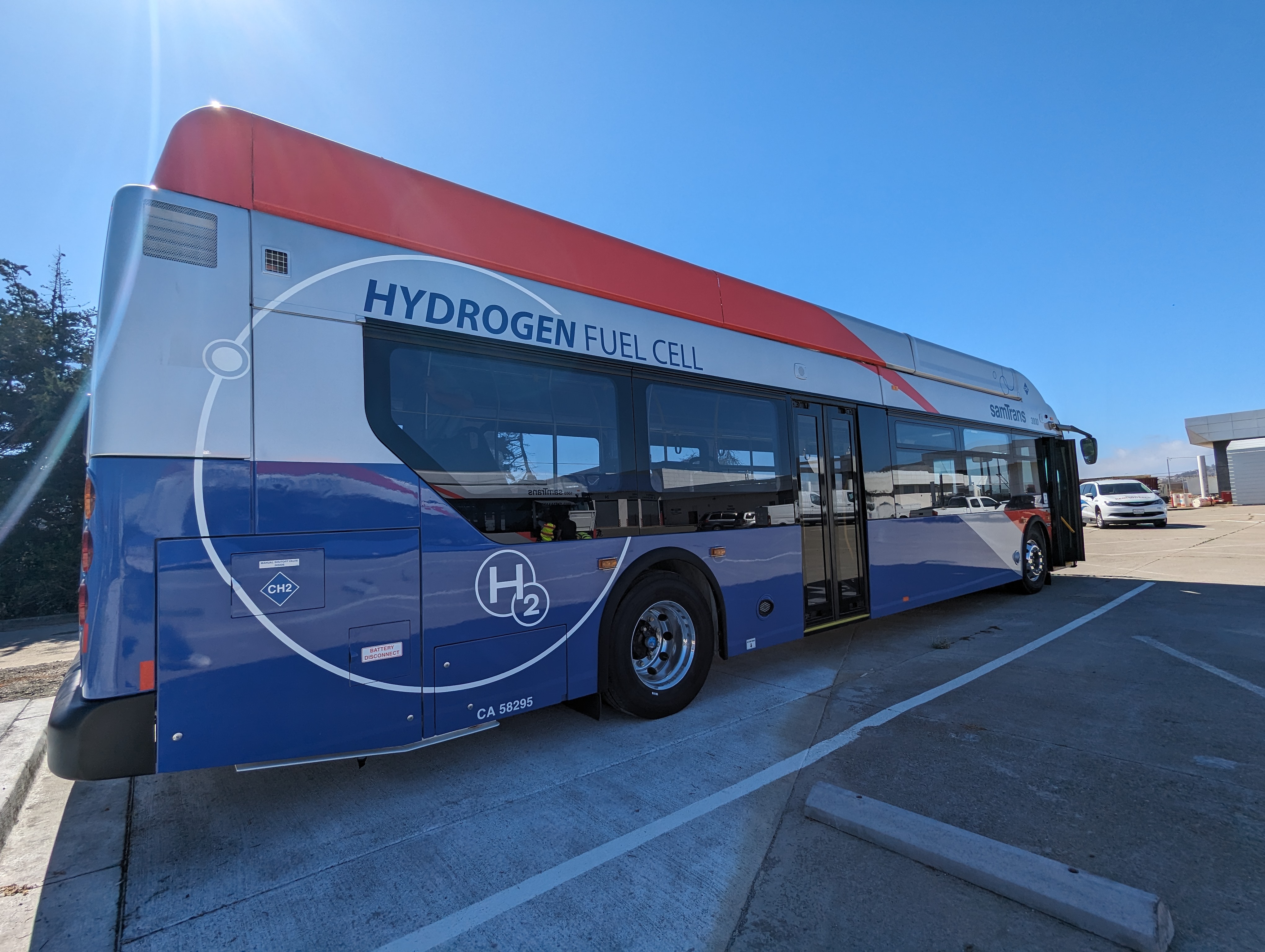
SamTrans' fleet includes vehicles that operate on diesel, gasoline, and increasingly, electricity, and hydrogen. As the District transitions to zero-emission technology, the fleet energy mix is changing. Since the beginning of FY24, SamTrans has added 24 battery-electric buses to its fleet (with 16 in active revenue service) and 10 hydrogen fuel cell electric buses (all in service).

SamTrans also contracts fixed-route buses and shuttles that use diesel and gasoline. SamTrans’ paratransit service, Redi-Wheels and RediCoast, use diesel and gasoline.

Diesel vehicles have been phased out of the non-revenue fleet entirely. The District's non-revenue fleet includes battery-electric vehicles and gasoline-electric hybrid employee pool cars, as well as supervisor vehicles, maintenance trucks, and specialty vehicles that run on gasoline.

Click on a fleet vehicle below to learn more:
Slide 1

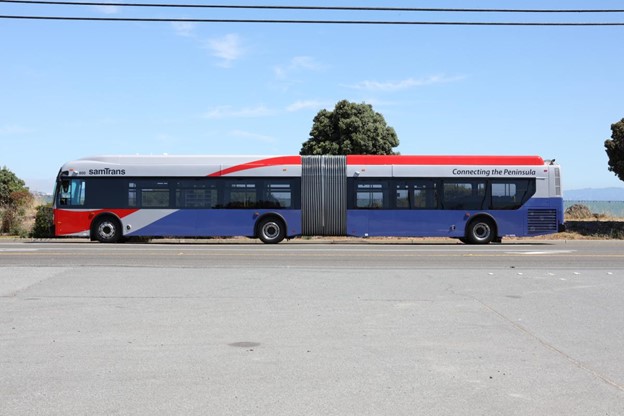
Articulated coaches
(60-foot)

  • Express, SFO, and Multi-city Service (routes such as ECR, 292, 294)
  • Accommodates 52-78 passengers
Slide 1

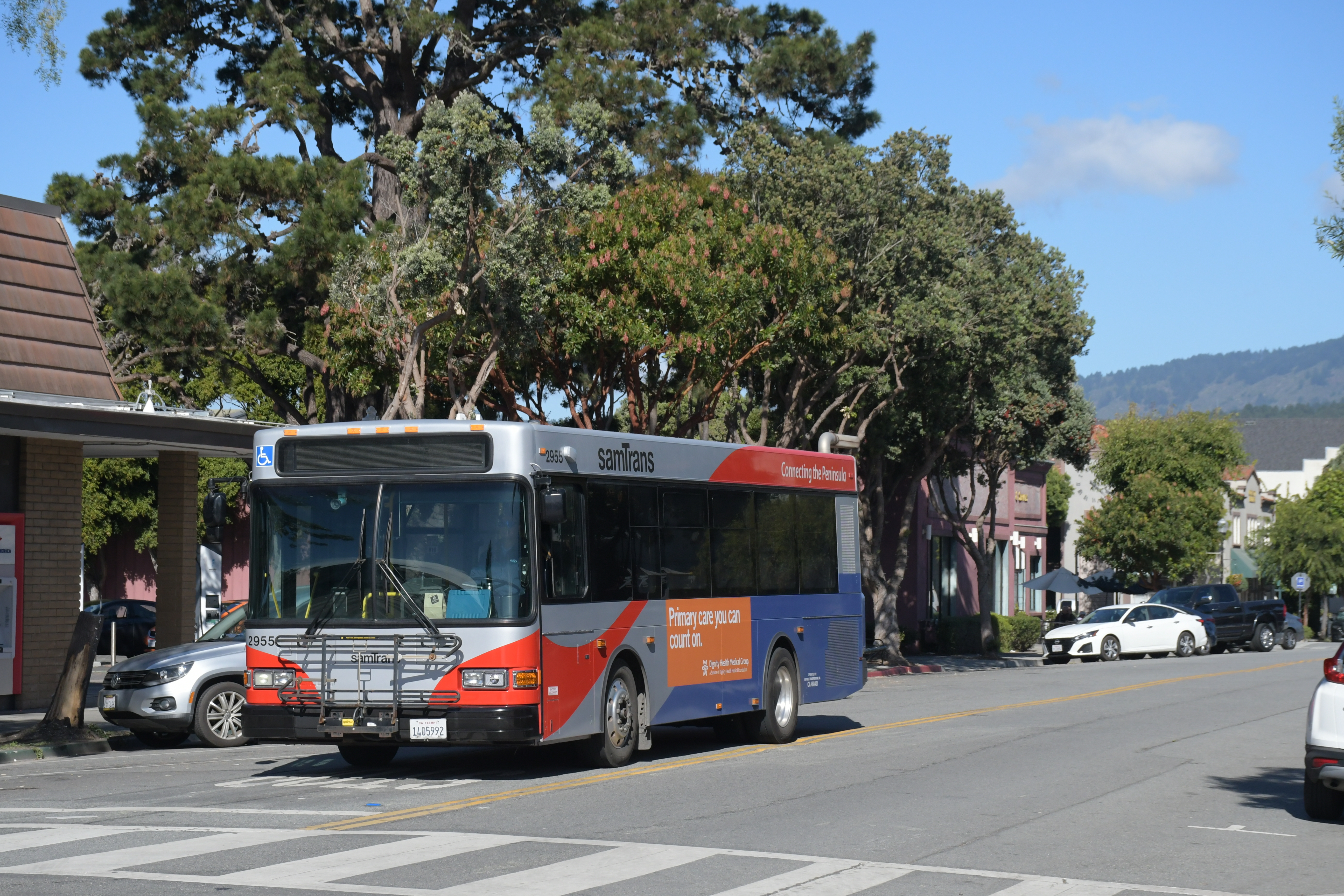
Standard coaches
(40-foot)

  • All Routes
  • Accommodates 39-62 passengers
Slide 1

BEBs
(40-foot)

  • All Routes
  • Highest-ever score for a BEB tested at Federal Transit Administrator's testing center
  • Accommodates 38-75 passengers
Slide 1

FCEBs
(40-foot)

  • All Routes
  • Quieter and cleaner - only exhaust is water vapor and a trace about of heat
  • Accommodates 38-73 passengers
Slide 1

Standard coaches
(35-foot)

  • Primarily light load schedules (i.e., Route 141); steep, narrow routes
  • Accommodates 32-41 passengers
Slide 1

Mini coaches
(29-foot)

  • Routes 117, 142, 15, and 18
  • Primarily shuttle routes and coastside school service
  • Accommodates 26-41 passengers
Slide 1

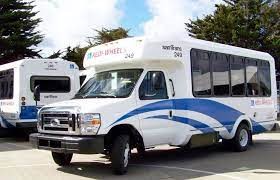
Paratransit Vehicles
(various vehicles)

  • (various vehicles)
  • Accommodates 3-9 passengers

Transitioning revenue fleet to zero-emission vehicles

SamTrans is taking progressive steps to transition its revenue fleet to zero-emission vehicles. The fleet already includes 25 diesel-electric hybrid buses added in 2014. In 2020, the SamTrans Board of Directors approved a long-term plan to convert the fleet to 100% zero-emission. Since then, the Board has approved the purchase of 37 battery electric buses (BEBs) and 118 hydrogen fuel cell buses (FCEBs) in the initial transition phase. Deploying zero-emission buses will dramatically reduce the agency's GHG emissions, advance state and regional air quality goals, and improve local air quality in alignment with the California Air Resource Board's (CARB) directive to transition all public fleets to zero-emission bus technology by 2040. SamTrans is running ahead of schedule and aims to achieve this requirement by 2034.

SamTrans Revenue Fleet breakdown by Year (%)

A bus illustration showing the breakdown of the fleet type.

In 2023 94% of the fleet were diesel vehicles. While only 6% were zero-emission vehicles.

A bus illustration showing the breakdown of the fleet type.

By 2026 52% of the fleet will be diesel vehicles. While 48% will be zero-emission vehicles.

A bus illustration showing the breakdown of the fleet type.

By 2034 it is projected that 100% of the fleet will be zero-emission vehicles.

Go Further: View Energy Use Annual Data

In FY2025, SamTrans' revenue and non-revenue fleet consumed approximately 347.1 million kBTU of energy. Diesel remained the largest fleet energy source, with approximately 2.2 million gallons consumed across revenue fleet operations. However, the fleet energy mix is beginning to change as SamTrans introduces zero-emission buses. In FY2025, the fleet used approximately 728,141 kWh of electricity and 6,861 kilograms of hydrogen, reflecting the early stages of the District's transition to battery-electric and hydrogen fuel cell buses.

SamTrans selected hydrogen fuel cell technology as a key part of its fleet strategy for several reasons. FCEBs offer comparable ranges to conventional diesel buses, which is critical for serving San Mateo County's diverse topography. Hydrogen buses can refuel in approximately 5 to 20 minutes, helping SamTrans maintain reliable schedules and high service levels without extended charging downtime. Together, these characteristics make fuel cell technology well suited to complement battery-electric buses across SamTrans' route network.

Vehicle energy use by Type

Note: As of FY2020, SamTrans is no longer renting the tenant space in the Central office.

As ridership continues to increase, SamTrans achieves greater energy efficiency per passenger trip and per vehicle mile traveled. When you add in the increased efficiency of the new zero-emission buses, these numbers start to go even lower. Investing in cleaner technology while simultaneously growing ridership puts us in the fast lane towards a smaller operational environmental footprint.

Revenue Fleet Energy Use per Boarding and Vehicle Mile

Arriving at Facilities

The District's four historically tracked facilities include the Central Administrative Offices (Central), North Base Maintenance and Operations Facility (North Base), South Base Maintenance and Operations Facility (South Base), and Brewster Depot, which is currently used by contracted bus and paratransit services. Many administrative functions for SamTrans, Caltrain, the San Mateo County Transportation Authority, and the San Mateo County Express Lanes Joint Powers Authority are shared and based out of the Central Administrative Offices located in San Carlos.

These four facilities use electricity for lighting, office equipment, maintenance equipment, and HVAC. Central, North Base, and South Base also use natural gas for heating. Additionally, the District operates the Linda Mar and Colma Park & Rides which use electricity for lighting.

In the second half of FY2025, SamTrans Facilities participated in a program sponsored by Pacific Gas & Electric (PG&E) to replace aged, inefficient gas water heaters with new, efficient electric heat pump models. Staff recognized an opportunity to replace seven water heaters across three locations (Central, NB, and SB), saving the District money in terms of installation costs, long-term maintenance, and natural gas delivery, all while lowering the overall carbon footprint.

Go Further: View Energy Use Annual Data

Electricity use by facility in kilowatt-hours (kWh).

In FY2025, SamTrans facilities used approximately 4.17 million kWh of electricity and 67,500 therms of natural gas. Although electricity consumption has increased as SamTrans supports expanded operations and the early phases of fleet electrification, the District procures 100% GHG-free and renewable electricity through San Mateo County’s community choice aggregator WestLight Energy, resulting in zero Scope 2 emissions from purchased electricity

Electricity Use per Facility [Footnote #1]

Natural gas use at Central, North Base, and South Base continues to represent the primary source of facility-related GHG emissions. Natural gas use for North Base, South Base, and the Central Administrative Offices is shown by fiscal year. Natural gas consumption during FY23-25 was influenced by facility operations, including periods when loading dock doors remained open during colder weather, which may have led to increased heating demand. The District continues to train and retrain staff on energy conservation best practices and identify opportunities to reduce usage of natural gas through operational improvements and equipment upgrades.

To address usage, staff worked with PG&E through the GK12 incentive program to replace older gas equipment with new, electric heat pump water heaters in anticipation of updated regional building and air quality requirements taking effect in 2027. The new 119-gallon units provide greater energy efficiency than natural gas water heaters and significantly reduces SamTrans’ carbon footprint given electricity is 100% renewable energy. The project cost of $260,000 was fully funded through PG&E incentives resulting in no cost to the District. The project is anticipated to reduce natural gas consumption and GHG emissions in the years to come.

Natural Gas Use per Facility

Footnotes

  1. Colma's electricity use is de minimus and not displayed in the above figure. ↩︎
Air Quality

Where to Next?

Water Use